Middle East Conflict Escalates: Oil Prices Surge as Iran Struck
The Middle East, a region perpetually on edge, has once again been plunged into a heightened state of conflict, sending shockwaves across global financial markets. In a dramatic escalation, Israeli forces launched a massive offensive against Iran, targeting critical infrastructure and military assets. This audacious move, coming amidst an already volatile geopolitical landscape, has been swiftly followed by retaliatory actions from Tehran, pushing oil prices to their highest levels in four years and signaling a dangerous new chapter in regional hostilities. The international community watches with bated breath as the phrase "Israel attacks Iran" reverberates across headlines, raising urgent questions about stability, energy security, and the specter of broader confrontation.
Israel's "Ring of Fire" Offensive Targets Iranian Strongholds
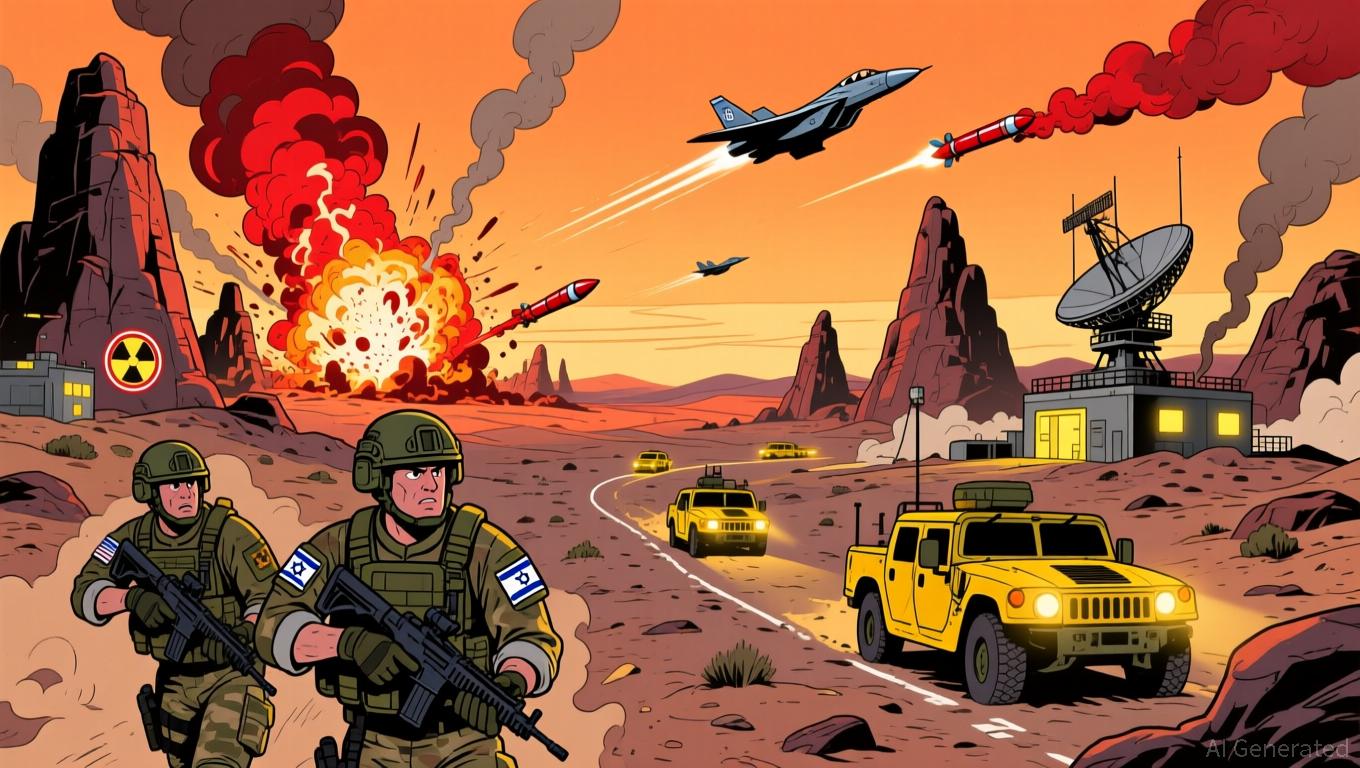
In the early hours of this Monday, an unprecedented military operation saw Israel unleash what its forces described as a "ring of fire" upon Iran. Hundreds of bombs rained down on strategic locations, primarily focusing on Tehran. The offensive specifically targeted key security headquarters, police installations, and vital anti-aircraft systems, aiming to dismantle the Islamic Republic's defense capabilities. This coordinated strike was not limited to the Iranian capital; simultaneous attacks were also reported against Hezbollah targets across Lebanon, underscoring the multi-front nature of the ongoing conflict.
The Israeli military released detailed figures regarding the scope of their operation, claiming to have decimated approximately 600 structures belonging to the Iranian regime. This extensive damage was reportedly inflicted using 2,500 munitions and involved the mobilization of an estimated 110,000 reservists. Among the targeted infrastructures, Israel specified 20 objectives related to Iranian military leaders, 150 ballistic missile sites, and 200 air defense systems. This precision-guided assault highlights a significant strategic shift, demonstrating Israel's capacity and willingness to strike deep within Iranian territory.
Meanwhile, the Iranian Revolutionary Guard Corps (IRGC) swiftly confirmed a new wave of attacks launched against Israeli government and military targets. Explosions were reported in major Israeli cities, including Jerusalem and Tel Aviv, indicating a rapid and forceful response to the initial Israeli offensive. Amidst these escalating hostilities, Iran issued a stark warning, declaring that it would not engage in negotiations with the United States. US Secretary of War Pete Hegseth, while denying any current American troop presence on Iranian soil, did not rule out future deployments as part of an ongoing operation against the Islamic Republic, leaving the door open for potential direct US involvement.
For more in-depth coverage of the initial strikes, you can read about Israel's "Ring of Fire" Strikes Tehran: 600 Iranian Sites Hit.
Global Economy on Edge: Oil Prices Soar as Supply Fears Mount
The immediate and most palpable global consequence of this escalating Middle East conflict has been a dramatic surge in crude oil prices. Futures for Brent crude, the international benchmark, skyrocketed by approximately 10%, nearing an alarming US$80 per barrel – its highest level in four years. The ripple effect wasn't limited to crude; diesel futures, a critical fuel for global logistics and industry, surged by more than a fifth. This sharp increase is a direct response to a series of disruptive events triggered by the conflict:
- Strait of Hormuz Halt: Traffic through the Strait of Hormuz, a choke point through which a fifth of the world's oil supply passes, effectively came to a standstill. Any disruption here sends immediate jitters through energy markets.
- Saudi Refinery Suspension: A major refinery in Saudi Arabia, one of the world's largest oil producers, reportedly suspended operations. The cause of this suspension, though not explicitly linked to direct attack in the context, signals heightened regional instability impacting critical energy infrastructure.
- Vessel Attacks: At least four vessels were reportedly attacked on Sunday, leading shipowners and operators to impose a self-declared pause in operations across key shipping lanes, further exacerbating supply chain concerns.
The impact on global economies could be severe. Higher energy prices translate into increased costs for transportation, manufacturing, and consumer goods, potentially fueling inflation and stifling economic growth worldwide. Businesses, already grappling with supply chain complexities, now face the added burden of unpredictable energy costs. Consumers, too, will feel the pinch at the pump and in rising prices for everyday necessities.
Practical Tip: Investors and businesses heavily reliant on global supply chains should reassess their risk exposure to energy price volatility and potential shipping disruptions. Diversifying energy sources or hedging against price fluctuations may become increasingly crucial in this uncertain environment.
Beyond the Nuclear Threat: The Push for Regime Change
While Iran's nuclear program has long been a flashpoint, experts suggest that the recent "israel ataca irán" offensive may have a more profound, underlying motivation: promoting a change of regime in Tehran. According to Ely Karmon, a political scientist and senior researcher at the International Institute against Terrorism, this current American-Israeli incursion isn't primarily aimed at dismantling Iran's nuclear capabilities. Instead, it seeks to curb Iran's ambition to build a massive arsenal of long-range missiles and, more significantly, to foster internal conditions conducive to a different leadership.
Karmon notes that this operation effectively marks the "second war" between the two nations, following a 12-day conflict in June 2025 where Israel was the primary actor, and the US, under President Trump, participated by bombing the crucial subterranean Natanz nuclear base. However, the objectives have evolved. The current strategy appears to leverage internal dissent within Iran, fueled by widespread civil protests that have seen hundreds arrested or killed by the regime. The hope, from the Israeli and American perspectives, seems to be that sustained pressure and destabilization could empower opposition forces and ultimately lead to a less confrontational Iranian government, thereby maintaining regional peace.
This perspective adds a complex layer to the current hostilities. It suggests that military strikes are not merely retaliatory or preemptive measures against specific threats but part of a broader, long-term geopolitical strategy to alter the very fabric of governance in Iran. The implications of such a strategy are immense, carrying significant risks of prolonged conflict and unintended consequences for the entire Middle East.
To delve deeper into this strategic objective, explore the discussion on Regime Change in Iran: The True Aim of US-Israel Attacks?
Geopolitical Ramifications and the Path Forward
The escalation of conflict between Israel and Iran, with the implicit backing and potential involvement of the United States, ushers in a new era of unpredictability in the Middle East. The immediate concern is containing the current hostilities and preventing a full-blown regional war that could draw in other global powers. Saudi Arabia, the UAE, and other Gulf states are closely watching, their own security and economic interests intrinsically linked to the stability of the region.
The path forward is fraught with challenges. Diplomacy, already fragile, becomes even more difficult amidst military actions and strong rhetoric. The international community faces the arduous task of de-escalation while addressing the root causes of the conflict, including regional rivalries, proxy wars, and the long-standing nuclear ambitions of Iran. The United Nations and other multilateral organizations will be pressed to find viable solutions to prevent further bloodshed and stabilize energy markets.
For individuals and nations alike, understanding the intricate web of motivations, historical context, and potential domino effects is crucial. The current situation demands careful consideration of both immediate military responses and long-term geopolitical strategies to avoid a catastrophic regional conflict.
Conclusion
The recent escalation, marked by Israel's "ring of fire" strikes on Iran and Iran's swift retaliation, has dramatically reshaped the Middle East's geopolitical landscape. Beyond the immediate military clashes, the most tangible global impact has been the unprecedented surge in oil prices, signaling potential economic distress worldwide. While the immediate focus is on containing the conflict, deeper analysis suggests a strategic push for regime change within Iran, adding layers of complexity to an already volatile situation. As the world grapples with the fallout from this intensified "Israel attacks Iran" dynamic, the urgent call for de-escalation and diplomatic solutions grows louder, even as the region teeters on the brink of wider confrontation, with profound implications for global stability and economic well-being.