Regime Change in Iran: The True Aim of US-Israel Attacks?
The Middle East remains a volatile crucible of geopolitical tension, with recent events once again shining a spotlight on the long-standing animosity between Iran, Israel, and the United States. Reports of intensified strikes have sent shockwaves across the globe, prompting crucial questions about the underlying objectives of these military actions. While the immediate concerns often revolve around security and defense, an increasingly prominent theory suggests a deeper, more ambitious goal: regime change in Iran. As israel ataca irán with renewed vigor, supported by the U.S., the world watches to discern whether this latest offensive is merely a response to immediate threats or part of a calculated strategy to alter the very fabric of Iranian governance.
A Deluge of Strikes: The Scope of the Recent Offensive
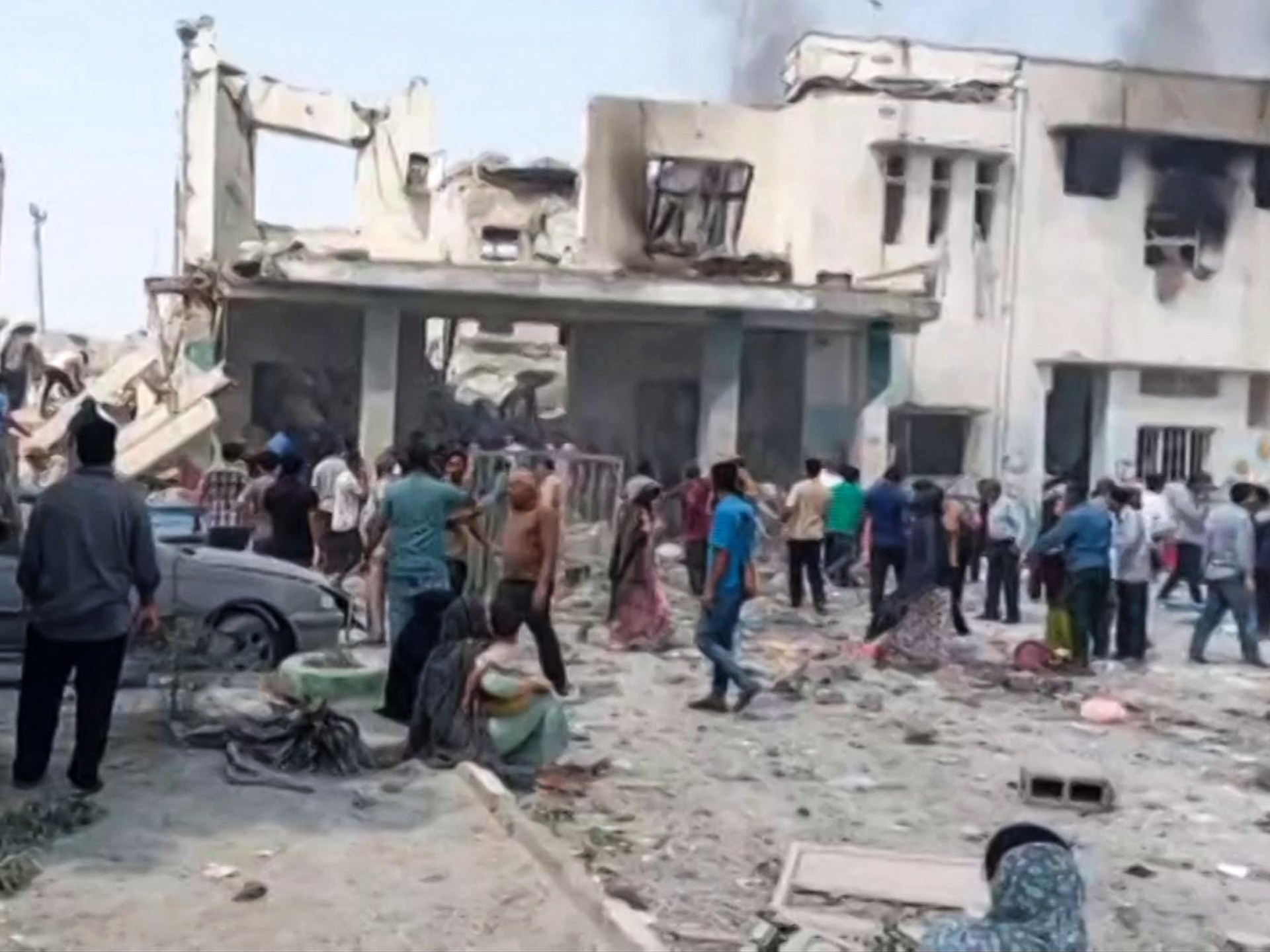
The recent escalation has been marked by a significant offensive, with Israel reportedly launching a "ring of fire" over Tehran, deploying hundreds of bombs. These extensive attacks were not confined to the capital, striking various targets across Iranian territory. Military communiques indicate that the offensive specifically targeted security headquarters, police installations, and critical anti-aircraft systems. Concurrently, a wave of attacks was also launched against Hezbollah strongholds throughout Lebanon, illustrating a broader regional scope to the operations.
According to statements from the Israeli military, approximately 600 structures associated with the Iranian regime were dismantled, utilizing an estimated 2,500 munitions and mobilizing around 110,000 reservists. Among the specific targets cited were 20 locations aimed at Iranian military leaders, 150 ballistic missile sites, and 200 air defense systems, painting a picture of a highly coordinated and destructive campaign. Simultaneously, Iran's Revolutionary Guard reported its own wave of counter-attacks against governmental and military targets within Israel, with explosions heard in cities like Jerusalem and Tel Aviv, signaling a dangerous back-and-forth.Israel's "Ring of Fire" Strikes Tehran: 600 Iranian Sites Hit for more details on the tactical aspects of these strikes.
Beyond Nuclear Ambitions: Shifting Objectives?
For decades, the international community's primary concern regarding Iran has centered on its nuclear program. However, expert analysis suggests that the current wave of US-Israeli attacks may be driven by a different, more profound objective. Ely Karmon, a political scientist and senior researcher at the International Institute against Terrorism, posits that this latest incursion is not primarily motivated by ending Iran's nuclear ambitions. Instead, he argues, the overarching goal appears to be the promotion of a regime change in Iran, which, from this perspective, would contribute to maintaining peace in the region.
This perspective marks a significant shift from previous confrontations. Karmon refers to the recent American-Israeli offensive as "practically the second war" between the two sides, following a 12-day conflict in June 2025. During that earlier engagement, Israel was the main protagonist, with the United States, under President Trump, participating through the bombing of the main nuclear base at Natanz—a subterranean facility considered difficult to destroy without substantial American firepower. While nuclear capabilities were central then, the current operation's objectives seem to have evolved, with Israel now particularly concerned about Iran's potential to build "an enormous arsenal of long-range missiles." This focus on conventional, yet highly threatening, weaponry highlights a strategic recalculation in the motivations behind the strikes.
The Calculus of Regime Change: Internal and External Pressures
The pursuit of regime change in Iran, if it is indeed the true aim, is a complex endeavor influenced by both internal dynamics within Iran and external strategic considerations. Internally, Iran has experienced significant civil unrest, with protests leading to hundreds of casualties and arrests by the regime. These widespread demonstrations and the government's harsh response could be perceived by external actors as indicators of internal instability, potentially creating an opportunity or justification for intervention designed to destabilize the current leadership further.
From an external standpoint, the United States' position adds another layer of complexity. While U.S. War Secretary Pete Hegseth explicitly denied having troops on the ground in Iran, he notably did not rule out a future deployment as part of operations against the Islamic Republic. This deliberate ambiguity leaves open the possibility of a more direct American role should circumstances evolve, feeding speculation about a long-term strategy involving regime change. Such a goal, while appealing to some as a path to regional stability, also carries immense risks of further destabilization, humanitarian crises, and unpredictable power vacuums. The potential for such a drastic shift in governance underscores the profound implications for regional peace and the global balance of power.
Economic Fallout: Global Repercussions of Escalation
Beyond the immediate military and political dimensions, the escalating conflict carries substantial economic repercussions that ripple across the globe. One of the most immediate and visible impacts has been on the energy markets. Following the intensification of hostilities, particularly after attacks on at least four vessels, the global oil market witnessed significant disruption. The Brent crude oil futures soared by approximately 10%, nearing US$80 per barrel, marking their largest surge in four years. Diesel futures, a vital fuel for the global economy, also shot up by over a fifth, indicating widespread concern about energy supply chains.
These price spikes were directly linked to a near halt in tanker traffic through the crucial Strait of Hormuz, a choke point for a significant portion of the world's oil supply. Furthermore, a major refinery in Saudi Arabia reportedly suspended operations, exacerbating fears of supply shortages in an already tense global market. Shipowners and operators have initiated self-imposed pauses, choosing to avoid the high-risk waters as the conflict spreads. These economic indicators serve as a stark reminder that military actions in the Middle East have far-reaching consequences, extending beyond the immediate belligerents to impact global trade, economies, and everyday life. Understanding these economic ramifications provides practical insight into the immense stakes involved in the escalating conflict.Middle East Conflict Escalates: Oil Prices Surge as Iran Struck for a deeper dive into the economic impacts.
The question of whether regime change in Iran is the true aim of US-Israel attacks remains a subject of intense debate and speculation. While official statements often focus on security threats and defensive measures, expert analysis and the scale of recent offensives suggest a potentially broader, more transformative objective. The convergence of severe internal dissent within Iran and a strategic shift in external powers' focus from nuclear programs to conventional missile capabilities, all against a backdrop of global economic volatility, paints a complex picture. Ultimately, discerning the true intentions behind these escalating actions requires a careful consideration of stated goals, observed strategies, and the profound implications for Iran, the wider Middle East, and the world.